
The pomegranate is an ancient fruit, often hailed as a “superfruit.” It boasts a vibrant red hue and a flavor profile that’s both sweet and subtly tart. This blog delves into various pomegranate uses and unveils 13 remarkable health benefits. Scientists are particularly intrigued by its beneficial compounds, and pomegranates have been cherished for centuries, even utilized in traditional medicine. Discover how this fruit can contribute to your overall well-being.
Pomegranate Nutrition Profile
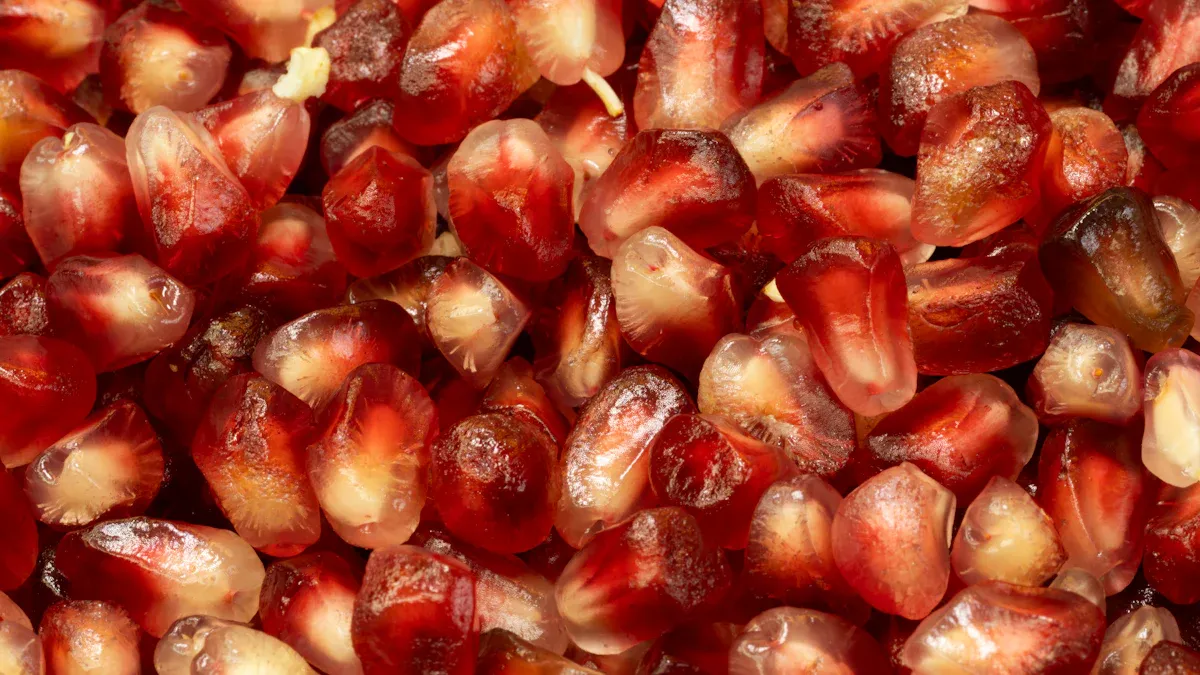
Pomegranate has great nutrients. This fruit has many key vitamins. It also has minerals. Its makeup shows why it is a superfruit.
Rich in Essential Nutrients
Pomegranate is full of key nutrients. A half-cup of pomegranate seeds gives you calories. It also gives you carbs and fiber.
| Nutrient | Value (per half cup) |
|---|---|
| Calories | 72 |
| Carbohydrates | 16 grams |
| Fiber | 3 grams |
| Folate | Present |
| Potassium | Present |
| Vitamin K | Present |
This fruit has many vitamins. It also has minerals. For example, it has Vitamin C. It has Vitamin K and Folate. It also has Potassium. These nutrients are very important. They help your body work well.
| Vitamin/Mineral | Quantity | % Daily Value |
|---|---|---|
| Vitamin C | 10.2 mg | 11% |
| Vitamin K | 16.4 μg | 14% |
| Folate (B9) | 38 μg | 10% |
| Potassium | 236 mg | 8% |
Potent Antioxidant Content
Pomegranate has many antioxidants. These protect body cells. They stop damage. The fruit has special antioxidants. Punicalagins and anthocyanins are strong ones. Punicalagins are very powerful. They make pomegranate a strong antioxidant. This fruit has many antioxidants. Ellagic acid is another one. Gallic acid is also important. These compounds lower stress. They help your health. Pomegranates have many antioxidants.
Good Source of Dietary Fiber
Pomegranate has good fiber. Fiber helps your digestion. A half-cup of seeds has 3.5 grams. This helps your daily fiber needs. Women need 22 to 28 grams. Men need 28 to 34 grams. Pomegranate seeds give 10% to 16%. Pomegranate juice has little fiber. It does not have the same benefits.
Pomegranates offer many health benefits. This fruit has powerful compounds. They support various body systems.
Powerful Anti-Inflammatory Effects
Pomegranates have strong anti-inflammatory compounds. These compounds help reduce swelling. Swelling happens all over the body. Long-term swelling causes many diseases. Pomegranate helps reduce this swelling. This makes it a valuable food. Its strong antioxidants help. Punicalagins are one type. They play a key role. They help fight swelling.
Supports Heart Health
Eating pomegranate helps your heart. It stops arteries from getting hard. This is called atherosclerosis. Studies show daily pomegranate juice helps. It makes arteries more flexible. This was seen in people. They had heart risk factors. Pomegranate also boosts PON1 activity. PON1 protects against heart disease. It breaks down bad fats. These fats are in blood vessels.
Pomegranate can help your heart. It reduces chest pain. This pain is called angina. Angina comes from low blood flow. This happens in the heart. Adults with heart disease had less angina. Pomegranate made it less strong. It happened less often. It also lasted less time. It also lowered troponin levels. Troponin shows heart damage. Research shows pomegranate juice helps. It lessens damage during exercise. This shows it protects the heart.
May Lower Blood Pressure
Eating pomegranate can lower blood pressure. Pomegranate extract lowers SBP. SBP is systolic blood pressure. It dropped by 5.2 mm Hg on average. This was true for people. They had high blood pressure. A 5% drop in SBP can help. It reduces big heart problems by 10%. Pomegranate helps blood pressure. It makes blood vessels wider. This is called vasodilation. Ellagitannins in pomegranate reduce stress. They also boost nitric oxide. Nitric oxide helps vessels relax.
Studies support these ideas. A study showed lower diastolic blood pressure. This was after 8 weeks. People used pomegranate extract. Another study saw a 36% drop. This was in serum ACE activity. SBP dropped by 5% with juice. Pomegranate juice lowers blood pressure. It works for high and normal pressure. A review of studies confirmed this. Pomegranate juice lowered both SBP and DBP.
Helps Manage Cholesterol Levels
Pomegranate can help cholesterol levels. Pomegranate juice stops bad LDL. LDL is “bad” cholesterol. It also lowers cholesterol making. This happens in immune cells. These cells are called macrophages. This stops cholesterol buildup. It stops foam cell forming. Foam cells start artery hardening. Pomegranate extract boosts gene expression. These genes are Cyp7a1 and Cyp7b1. They control bile acid making. This lowers total cholesterol. It happens in the liver and blood.
Pomegranate also raises HDL-C levels. HDL-C is “good” cholesterol. It does this by changing enzymes. These enzymes are linked to HDL. Pomegranate has many antioxidants. Polyphenols are one type. They reduce stress. This stops LDL from oxidizing. Its anti-inflammatory traits also help. They reduce swelling in blood vessels. This causes heart disease. It also affects cholesterol. These heart benefits are big.
Protects Against Oxidative Stress
Pomegranate has strong antioxidants. These protect the body. They fight oxidative stress. This stress happens when things are out of balance. Free radicals and antioxidants are involved. Pomegranate eating boosts TAC. TAC is total antioxidant capacity. It also boosts SOD levels. SOD is superoxide dismutase. It also lowers MDA levels. MDA shows oxidative damage. Pomegranate helps with oxidative stress. But more studies are needed. This will make claims certain.
Potential Anti-Cancer Properties
Pomegranate may fight cancer. Its compounds can stop cancer cells. They stop them from growing. Research suggests pomegranate may help. It fights many cancer types. These include skin cancer. Also breast cancer. Lung cancer too. Cervical cancer. Oral cancer. Endometrial cancer. Colon cancer. Colorectal cancer. Pomegranate fights cancer. This is because of its polyphenols. These compounds stop cancer cells. They stop them from growing and spreading.
Boosts Digestive Wellness
Pomegranate has a long history. It was used for gut problems. Old medicine used it. It healed gut wounds. It treated diarrhea. Drinks from pomegranate were given. Sometimes with rice and barley. This was for diarrhea. Pomegranate seed extract was used. It helped anal wounds. It helped hemorrhoids. Roasted pomegranate seed flour helps. It strengthens the stomach. It fights diarrhea.
Pomegranate also fights bad gut bacteria. It stops E. coli from growing. It stops Shigella. It stops Salmonella. It also fights H. pylori. This causes stomach ulcers. Punicalagin and ellagic acid are compounds. They stop diarrhea. Pomegranate flowers were even used. They helped with hernias.
| Model | Activity | Plant part/compound | Mechanism |
|---|---|---|---|
| Bacterial | Antibacterial properties against enteropathogens | Fruit exocarp (aqueous and methanol extracts) | Growth inhibition against E. coli, Shigella sonnei, Shigella flexneri, and Salmonella species (36-100% inhibition, MIC 1-4 mg/ml) |
| Bacterial | Antibacterial activity against enterohaemorrhagic E. coli | Fruit shell (aqueous extract) | Growth inhibition of E. coli O157:H7, O26:H11, O111:NM, and O22 (MIC=0.19mg/ml, MBC=0.39 mg/ml) |
| Bacterial | Antibacterial activity against H. pylori | PPE (methanol extract) | Growth inhibition (Inhibition zone diameter=39±3.4 mm) |
| Bacterial | Antibacterial effect against H. pylori | PPE ethanol extract | Decreased Urease activity (IC50=6 mg/ml) |
| Protozoal | Antiprotozoal activity | Fruit exocarp (methanol extract) | Active against Entamoeba histolytica (IC50=29.5 µg/ml) |
| Cellular | Chemopreventive against colon cancer | Urolithin-A | Decreased COX-2 protein expression; Increased C-CASP-3 expression |
| Cellular | Antiproliferative in colon cancer cells | PJ | Increased miR-126; Decreased VEGF, IGF, pPI3K, AKT |
| Cellular | Anti-inflammatory effect | Pomegranate beverage (polyphenolics) | Decreased Ki-67 proliferative index and miR-145; Decreased TNF-α, IL-1β, COX-2, iNOS, p70S6K1, and HIF1α |
Enhances Cognitive Function
Pomegranate may make your brain work better. A review found a good link. Pomegranate treatment helped brain function. This means eating pomegranate daily. It could lower the risk. It could lower risk of brain problems. A study showed older adults. They had memory issues. They drank 8 ounces of juice daily. This was for 4 weeks. Their verbal memory got better. This group also showed more brain activity. This happened during memory tasks. This means pomegranate juice may help memory. It does this by sending more blood to the brain.
Animal studies also show this. Pomegranate extract helped memory. It helped learning. This was in Alzheimer’s mice. It also made them less anxious. Other studies showed pomegranate changed levels. It changed amyloid-beta peptides. These are linked to Alzheimer’s. Pomegranate also lowered swelling. This was in the brain. This means it fights brain diseases. Pomegranate Peel Extract helped spatial memory in mice. It lowered amyloid plaque. It also lowered swelling.
Improves Exercise Endurance
Pomegranate can help you exercise longer. Pomegranate extract increases TTE. TTE is total time to exhaustion. This was in trained cyclists. It also increases time to VT2. VT2 is ventilatory threshold 2. This happens because of nitrates. Nitrates are in pomegranate. Nitrates help make NO. NO is nitric oxide. This happens during exercise. NO helps blood vessels relax. It sends more blood to muscles. Polyphenols in pomegranate protect NO. Punicalagins are special ones. This makes NO work better. Taking pomegranate extract regularly helps. It improves performance. Both maximal and submaximal.
Promotes Skin Radiance
Pomegranate helps your skin look good. Its polyphenols are strong antioxidants. They fight bad free radicals. They protect skin from harm. This stops early aging. Polyphenols also reduce swelling. They can calm skin irritation. They can calm dryness. This makes skin calmer. It makes it plumper. Pomegranate polyphenols also make collagen. Collagen makes skin stretchy. It makes it firm. These are key for young, glowing skin. New research suggests pomegranate extracts help. They help the skin microbiome. A healthy skin microbiome is key. It makes skin healthy and glowing.
Studies show big improvements. A special pomegranate extract helped skin glow. It improved by 42.8%. Drinking fermented pomegranate extract daily helped. It improved skin moisture. It improved brightness. It improved elasticity. It improved collagen density. Putting the same extract on skin also helped. It boosted skin moisture. It reduced spots. An ellagic acid-rich pomegranate extract protected skin. It protected from UV damage. It made skin brighter. It lowered melanin.
Strengthens Immune System
Pomegranate has things that boost your immune system. Punicalagin, punicalin, and ellagic acid are main parts. They are in pomegranate peel extract. They work together. They help the immune response. Other parts include gallic acid. This is a phenolic acid. Flavonoids like anthocyanins are also there. These help with antioxidants. They help with anti-swelling effects. These effects are key for immune health. High levels of tannins are present. Also ellagitannins. Ellagic acid. Anthocyanins. They directly fight bad oxygen. They also change redox signaling. Pomegranates make defenses. These fight bacteria. They work with your body. They work with cells. They work with your immune system.
Aids in Blood Sugar Regulation
Pomegranate may help control blood sugar. Studies show pomegranate juice helps. Extracts also help. They improve sugar use. They lower insulin needs. They make insulin work better. Some studies also link pomegranate. It links to better sugar control. It may lower diabetes risk. But a review of studies found no big changes. Pomegranate did not change sugar levels much. It did not change insulin levels. It did not change HOMA-IR. It did not change HbA1c.
Supports Kidney Health
Pomegranate helps protect kidneys. One study looked at pomegranate. It looked at reversing kidney damage. This was in rats. The findings showed pomegranate protects. It protects because of antioxidants. It fights free radicals. This is due to its active compounds. Pomegranate could be good. It could fight kidney problems. It makes things better. It helps with body chemicals. It helps with tissue. Another study looked at PFE. PFE is pomegranate flower extract. A small amount of PFE helped a lot. It lowered kidney damage markers. These include serum creatinine. Also blood urea nitrogen levels. It also made tissue damage better. This means PFE protects kidneys. It protects against harm.
Pomegranate Uses: How to Enjoy

This section looks at different pomegranate uses. People enjoy this fruit in many ways. You can eat it fresh. Or you can use it in cooking.
Eating Fresh Pomegranate Arils
People like fresh pomegranate arils. These are the juicy pomegranate seeds inside. Pick a pomegranate that feels heavy. This means it has juicy arils. The skin should be firm. It should not have soft spots. A round-square shape means it is ripe. Keep whole pomegranates at room temperature. They last a few days. For longer storage, put them in the fridge. They can last up to two months. Fresh pomegranate seeds or juice last five days in the fridge. Frozen pomegranate seeds can last a year.
Benefits of Pomegranate Juice
Pomegranate juice has many benefits. It has antioxidants. It helps your heart stay healthy. But pomegranate arils have more fiber. Juicing takes out most fiber.
| Nutrient | Pomegranate Arils (3.5 oz) | Pomegranate Juice (3.5 oz) |
|---|---|---|
| Fiber | 4 grams | 0 grams |
| Antioxidants | Present | Present |
| Heart Health Benefits | Present | Present |
Both the arils and the juice are good. Drinking pomegranate juice is a common way to eat this fruit. Many like the taste of pomegranate juice. This healthy juice gives many nutrients.
Culinary Applications and Recipes
Pomegranate uses are in many dishes. People add pomegranate seeds to guacamole. They also use them in salads. One is mache with pink grapefruit and pomegranate. Chefs make sorbet from pomegranate. They also make jelly. They freeze pomegranate juice in ice trays. This frozen juice can be used later. Some recipes use pomegranate juice to glaze turkey. They mix it with stock and jelly. Another dish is Khoresht-E-Fesenjan. It has chicken, walnuts, and pomegranate. Coating pomegranate seeds in chocolate is a sweet treat. These pomegranate uses show its many ways.
Pomegranate Supplements and Extracts
Pomegranate supplements are sold. But there is no set amount for these. How well pomegranate juice extract works varies. This depends on the active parts inside. Things like fruit ripeness change these parts. How it is made also changes them. Makers should say how much polyphenol is in it. This includes punicalagin, ellagic acid, and anthocyanins. High amounts of pomegranate can be safe. But clear rules for people are still being made. These pomegranate uses are for certain health goals.
Things to Think About
Possible Problems
Eating pomegranate can cause problems. Some people get stomach issues. Others feel like they have the flu. Some have pee problems. Pomegranate has a lot of potassium. This is bad for people with kidney disease. The root, stem, and peel have poisons. Eating a lot of these parts can hurt you. Rarely, pomegranate with statin drugs can cause muscle breakdown. This can hurt kidneys.
Medicine Problems
Pomegranate can mix badly with some drugs. It can raise levels of ACE inhibitors. These drugs treat blood pressure. They also treat heart failure. Pomegranate has much vitamin K. This can stop blood thinners from working. People on blood thinners need steady vitamin K. They should talk to a doctor. Mixing pomegranate with statins is risky. Statins lower cholesterol. This mix can cause muscle breakdown. It can cause kidney failure. Pomegranate can block a gut enzyme. This causes the problem. Pomegranate can lower blood pressure. Mixing it with blood pressure drugs can make pressure too low. Pomegranate may also stop some stomach drugs from working. This makes them less helpful.
Allergic Responses
Some people are allergic to pomegranate. They may feel an itchy mouth. Their lips and throat may itch. These areas can also swell. Skin can get a red rash. It can itch or get hives. General swelling can happen. People might also get stomach pain. They may feel bloated. Diarrhea, nausea, and throwing up can occur. Breathing problems include a runny nose. They may wheeze. They may have trouble breathing. Bad allergies can cause heart problems. They can cause a severe body reaction.
The pomegranate is very healthy. It gives many good things. This fruit is good for cooking. People can eat it every day. Eating pomegranates helps you feel good. The pomegranate is a superfood. Eat superfoods like pomegranate. Live a healthier, better life.